

Pig study finds enrichment can reduce boredom and boost natural behaviour
- Hayley O'Keeffe
- 6 days ago
- 4 min read
A pioneering enrichment project involving two miniature boars has highlighted how simple activities including scatter feeding, puzzle toys and rooting boxes could improve pig welfare.

The study was carried out at Burren Nature Sanctuary in Kinvara, County Galway, as part of its ethical European partnership with Buckinghamshire-based Kew Little Pigs Farm.
Academic researcher Ellie Cullinan (pictured), from University College Cork, observed boars Apollo and Jupiter before, during and after a programme of eight different enrichment conditions between July 8 and August 5.
The activities included scattering food around their enclosures, puzzle feeders made from recycled materials, toys, new scents, a rooting box filled with hay and hidden vegetables, scent exchanges and two forms of auditory enrichment.
The results showed a statistically significant reduction in repetitive pacing while enrichment was being provided.
Pacing fell to zero during five of the enrichment conditions: scatter feeding, toys, puzzle feeders, scent-based enrichment and rooting boxes.
Scatter feeding prompted a particularly strong response, with both pigs spending 100 per cent of the enrichment session foraging and neither displaying any pacing.
The rooting box also encouraged natural behaviour, with Apollo’s foraging increasing from 38.5 per cent before the activity to 100 per cent while it was available.
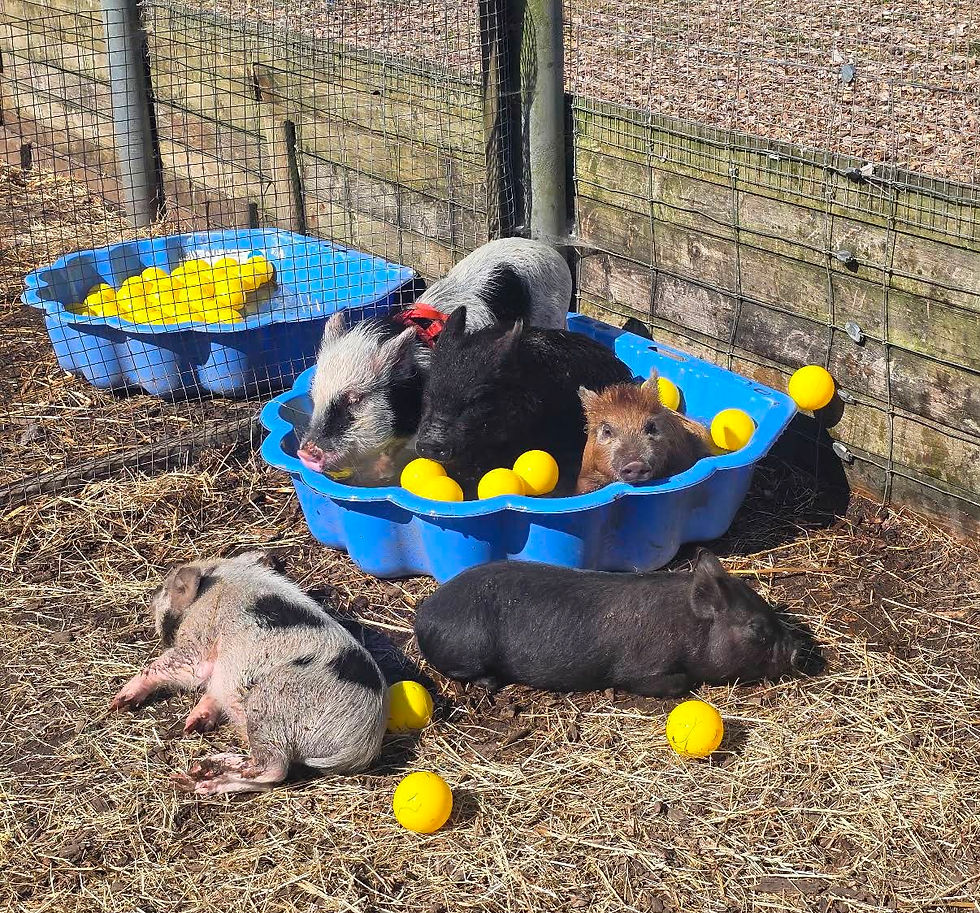
Pigs are highly intelligent and social animals which generally thrive in the company of other pigs. However, there may be occasions when a pig has to live alone temporarily, including during illness, recovery or when animals need to be separated for breeding and welfare reasons.
Apollo and Jupiter spent periods living separately over the summer to prevent them from breaking into the female pigs’ enclosures, making them ideal candidates for the enrichment study.
Pigs also have a strong instinct to explore their surroundings using their snouts. In natural or semi-natural environments, they spend much of their time rooting, searching for food and investigating new objects.
When pigs are unable to express these behaviours, particularly while housed alone, they can experience boredom, frustration and stress, which may result in repetitive actions such as pacing or bar biting.
The project also demonstrated that enrichment should be tailored to each pig rather than approached as a one-size-fits-all exercise.
While a bottle containing pebbles produced little behavioural change, Jupiter responded noticeably to music played on a steel tongue drum. He vocalised and wagged his tail while the instrument was being played before settling down afterwards.
Apollo, meanwhile, appeared to find the scent of lavender calming and went to sleep following the session.
Mary Bermingham, founder of Burren Nature Sanctuary, said: “This project has given us a fascinating insight into Apollo and Jupiter as individuals, as well as demonstrating how important it is to give pigs meaningful choices and opportunities to express their natural behaviour.
“Pigs naturally like to socialise, but there are times when they may need to live alone, for example when they are sick or have to be separated for their own welfare. Apollo and Jupiter were housed separately at times over the summer to prevent them from breaking into the female pens, which made them ideal candidates for this study.
“Some of the most effective activities were also among the simplest, such as scattering food or providing a box where the pigs could root and search for treats.
“What worked for one pig did not always produce the same response in the other, so enrichment must be observed, reviewed and adapted. That individual approach is at the heart of good animal welfare.
“Our hope is that pig farmers will see this research and recognise how simple, inexpensive enrichment can be introduced into everyday care. If its findings encourage wider change, this project could help improve the lives of thousands of pigs.”
The researchers cautioned that the study involved only two boars, meaning its findings should be regarded as evidence of behavioural changes in Apollo and Jupiter rather than applied to pigs more generally.
However, pacing remained significantly lower during final observations conducted without enrichment than it had been at the beginning of the project. Both pigs were also spending substantially more time foraging by the final week.
Burren Nature Sanctuary is Kew Little Pigs Farm’s only official European partner. The partnership was established to raise responsibly bred miniature pigs within the European Union and place them with carefully vetted homes across Ireland and mainland Europe.
It combines Burren’s conservation and animal-care work with more than 16 years of pig breeding, husbandry and welfare experience at Kew Little Pigs Farm.
The organisations do not sell pigs for slaughter. Prospective owners must demonstrate that they have suitable outdoor space, housing and facilities, while first-time keepers are required to complete pig-keeping education covering subjects including feeding, health, behaviour, welfare, biosecurity and legal responsibilities.
Pigs are social animals and the partnership advises that they are generally happiest with porcine companionship. Buyers must also understand that so-called “teacup pigs” do not remain tiny, with fully grown miniature pigs typically reaching around knee height.
Olivia Mikhail, owner of Kew Little Pigs Farm, said: “Our partnership with Burren Nature Sanctuary is founded on a shared belief that welfare must come before sales.
“Responsible breeding is only the beginning. Every pig needs companionship, space, enrichment, appropriate veterinary care and an owner who understands that taking on a pig is a long-term commitment.
“This study shows why providing a stimulating environment is not an optional extra. Pigs are intelligent, inquisitive animals and their emotional and behavioural needs deserve to be taken just as seriously as their physical health.
“We carefully assess prospective homes and support owners with education and advice because our responsibility to each pig does not end when it leaves the farm.”
Anyone interested in buying a pig must contact the specialist Pig Sales team at pigsales@kewlittlepigs.com to find out more about availability and the approval process.


